
The Terroir of Domaine du Duc de Magenta
Chassagne-Montrachet · Puligny-Montrachet · Côte de Beaune
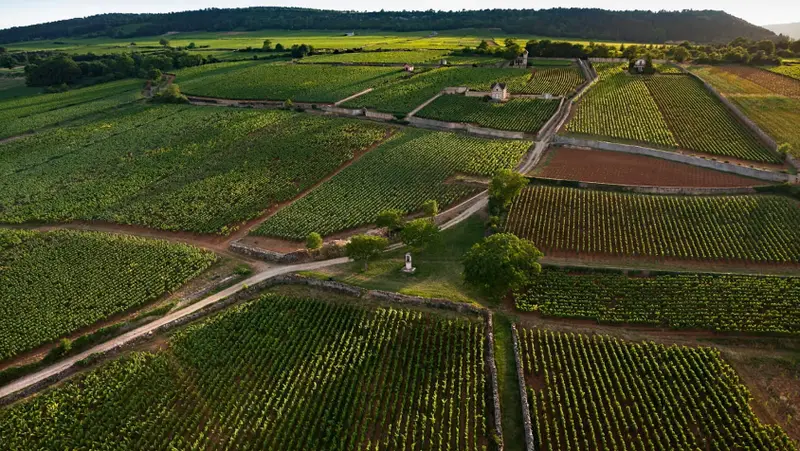
The vineyard of Domaine du Duc de Magenta extends over 12 hectares in the heart of two of the most prestigious appellations of Burgundy: Chassagne-Montrachet and Puligny-Montrachet. It is here, on the sun-drenched slopes of the Côte de Beaune, that the Cistercian monks of the order of Cîteaux identified, as early as the 12th century, a terroir of unrivalled richness. Their visionary intuition is today confirmed by science: the unique combination of ancient limestone soils, an ideal exposure and a privileged microclimate gives our wines a minerality, a finesse and a complexity found nowhere else. Here in Burgundy, each parcel, each row of vines tells a geological story stretching back many millions of years. Chardonnay, the king of grapes on these lands, finds its perfect expression here, revealing in every vintage the quintessence of a terroir shaped by time and the work of generations.
Exceptional limestone soils
The soils of the Abbaye de Morgeot rest on a limestone substratum formed in the Jurassic period, almost 170 million years ago. Two major geological formations make up our subsoil: clay-limestone marls, rich in minerals, and Bathonian limestone, more compact and resistant, which forms the bedrock of our highest slopes.
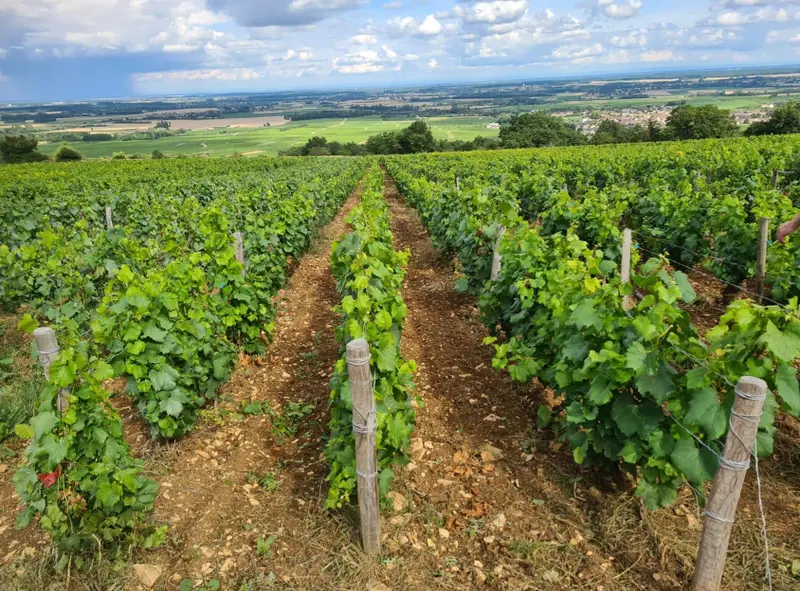
At the surface, our parcels display the clay-and-limestone mixture characteristic of the Côte de Beaune. This brown earth, dotted with white stones and limestone slabs, offers a perfect balance between water retention and natural drainage. The roots of our vines plunge deep into the fissured rock, sometimes as far as five or six metres, drawing from it the mineral elements that give our wines their distinctive saline character.
The proportion of clay and limestone varies from one parcel to another, which explains the diversity of our cuvées. On the most chalky parcels, the wines gain in tension and minerality; where clay predominates, they develop more roundness and power. It is this mosaic of soils that makes the richness of our vineyard, and that has, for centuries, justified the renown of these terroirs.
A privileged microclimate
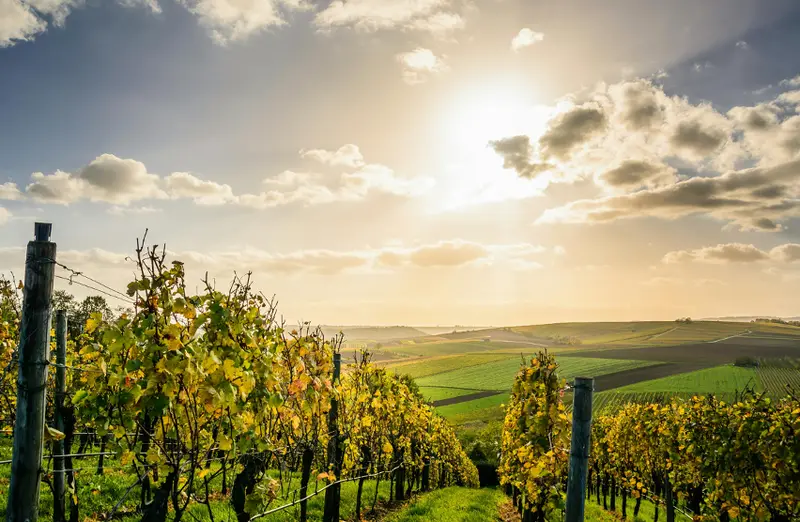
The vineyard of Domaine du Duc de Magenta enjoys a temperate continental climate, marked by the subtle nuances peculiar to Burgundy. Our parcels, situated between 200 and 300 metres of altitude on the slopes of the Côte de Beaune, benefit from an east to south-east exposure, which offers them optimal sunshine from the morning while protecting them from the excessive heat of the afternoon.
The temperature differences between day and night, particularly marked in late summer, encourage a slow and steady ripening of the grapes. Cool nights preserve the natural acidity of the Chardonnay, a guarantee of freshness and long ageing, while the warmth of the day allows the aromas to concentrate gradually.
The moderate rainfall of the region, combined with the natural drainage of our limestone soils, prevents any excess of water at the foot of the vines. In the driest vintages, the deep roots of our old vines draw the necessary moisture from the fissures of the bedrock, ensuring a constant and steady supply.
Our parcels and appellations
Several appellations, several expressions of one and the same terroir of excellence
Chassagne-Montrachet 1er Cru
“ Abbaye de Morgeot ”
The historic lieu-dit of the Abbaye de Morgeot, the cradle of the estate, where the Cistercian monks planted the first Chardonnay vines. This appellation is one of the Climats of the Burgundy vineyards inscribed on the UNESCO World Heritage List. The parcel benefits from an ideal south-east exposure and deep clay-limestone soils that give the wine a remarkable aromatic richness and complexity. The wines develop notes of hazelnut, fresh butter and candied citrus, supported by minerality and an exceptional ageing potential.
Discover this cuvée →Puligny-Montrachet 1er Cru
“ La Garenne ”
Set at altitude on a stony, rocky terroir, La Garenne produces wines of striking tension and minerality. The very chalky, shallow soils force the vines to root deeply into the rock. The result is wines of great purity, with aromas of gunflint, lime and white flowers, marked by a crystalline freshness.
Discover this cuvée →Puligny-Montrachet
“ Les Houillères ”
On this village terroir, the more clayey and generous soils give wines that are more accessible in their youth, while still keeping the elegance characteristic of Puligny-Montrachet. Floral and fruity notes, an ample and silky palate: a perfect introduction to the world of the estate.
Discover this cuvée →Bourgogne Blanc
“ Les Houillères ”
Our regional appellation receives the same meticulous care in the vineyard and the cellar as our Premier Crus. Made from a parcel on the edge of the village of Puligny-Montrachet, this Bourgogne Blanc offers a frank and generous expression of Burgundy Chardonnay, with excellent value for money.
Discover this cuvée →
Sustainable viticulture
At Domaine du Duc de Magenta, we practise sustainable viticulture, deeply respectful of the ecosystem that surrounds us. Every intervention in the vineyard is considered and measured: every decision follows attentive observation of the vine and its environment. Treatments are reduced to the essential minimum required to protect the vine.
Our yields have historically been kept at low levels, often well below the limits permitted by the appellations. This reality allows a natural concentration of the juices and an even deeper expression of the terroir in each bunch. The harvest of the Premier Crus is entirely by hand, with pickers selecting only grapes of optimal ripeness.
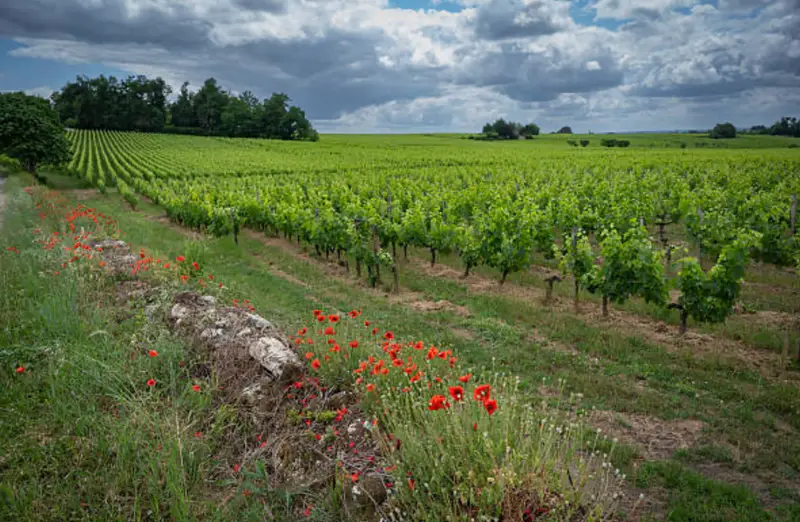
Natural grass cover between the rows is essential to encourage mycorrhization and the regeneration of soil life in general. At pruning time, the cuttings are chipped on site to naturally increase organic matter. These specific actions build the natural resilience of the vine in the face of unusual heat and drought, while limiting soil erosion on the steep slopes and promoting the biodiversity of flora and fauna. Beneficial wildlife — pollinating insects, birds of prey, bats — preserved in the trees and natural areas around the parcels contributes to the ecological balance of the vineyard. The average age of our vines, over 35 years, benefits from deep rooting, increasing the natural resilience of the vine, vintage after vintage.
Come and discover our terroirs
Walk through our appellations and taste our wines in the heart of the estate.