
Chassagne-Montrachet vs Puligny-Montrachet: the full comparison
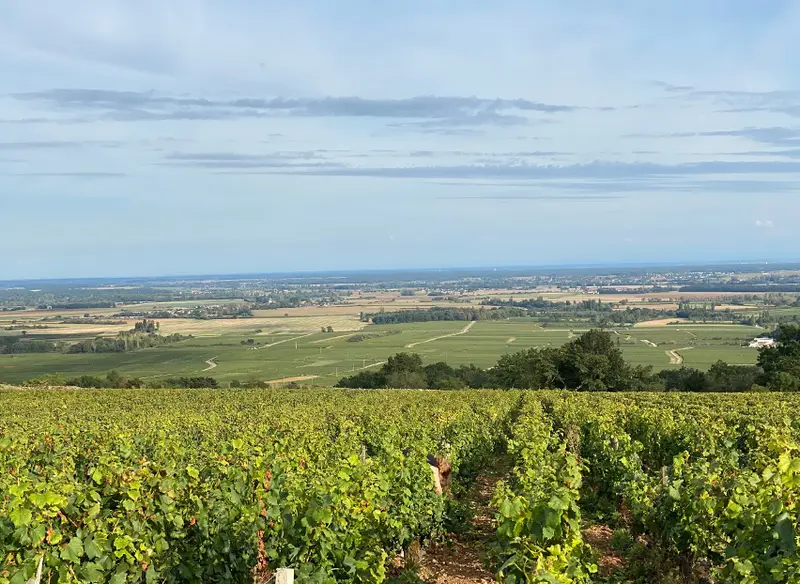
Chassagne-Montrachet and Puligny-Montrachet: two legendary names in the wine-growing Burgundy, two neighbouring appellations separated by just a few hundred metres. Yet their white wines — all made from Chardonnay — display quite distinct personalities. Power and generosity on one side, finesse and tension on the other. This guide compares the two appellations in detail to help you understand their differences and choose the wine that suits you.
Puligny vs Chassagne-Montrachet: key differences
Chassagne and Puligny share the same king of grapes — Chardonnay — and lie just a few hundred metres apart. Their vineyards touch, their geologies overlap, and their greatest climats flank the same summit: the Grand Cru Le Montrachet. Yet from the very first sip, their wines tell different stories.
Understanding these differences means entering into the very subtlety of Burgundy, where every slope, every soil type, every exposure shapes a unique character. Both villages border the Grand Cru Le Montrachet, considered by experts to be the greatest white wine in the world. Each lays claim to a part of this mythical terroir, and each draws from it a singular expression.
This friendly rivalry has lasted for centuries. In the 19th century, both communes added the name “Montrachet” to their village name to benefit from the prestige of this legendary climat. Chassagne did so in 1879, Puligny in 1878. Ever since, Burgundy lovers have debated endlessly: which village produces the better white?

Location, terroir and soils compared
Chassagne-Montrachet
Lying further south, Chassagne-Montrachet has clayier soils and varied exposures (east, south-east). The vineyard stretches over 330 hectares, of which 55 are classified as Premier Cru. Notable fact: the village also produces Pinot Noir reds, representing around 35% of production. This white-red duality is a particularity of Chassagne.
The clay soils, heavier and deeper, retain more water. In times of drought, the vine keeps on feeding, which translates in the glass into wines that are fleshier, broader and more generous. The grey Bathonian marls, present notably in the climat of Morgeot, add a particular mineral richness.
Puligny-Montrachet
Further north, Puligny-Montrachet shows more limestone, stonier soils, with a clean east-facing exposure. The vineyard covers 210 hectares, of which nearly 100 are classified as Premier Cru — a remarkable proportion. Production is almost exclusively devoted to Chardonnay.
Puligny's limestones drain water more quickly. The vine, lightly stressed, produces grapes with more concentrated acidity, giving wines that are tauter, livelier and more mineral. The bedrock of limestone slab, sometimes outcropping, lends that famous flinty note one recognises in the finest Puligny.
For more on the geology of Chassagne-Montrachet, see our page devoted to terroir.
Tasting profile: Chassagne vs Puligny white wine
Chassagne-Montrachet white wine style
The colour is golden, often more deeply toned than Puligny. On the nose, one discovers ripe white fruit — vineyard peach, Williams pear — together with buttery and honeyed notes. On the palate, the wine is broad, rich, enveloping, with an underlying minerality that supports the whole. The finish, long and persistent, unveils accents of toasted hazelnut and almond. Power and generosity are the watchwords.
Puligny-Montrachet white wine style
The colour is pale, often touched with green highlights. The nose opens on citrus — lemon, grapefruit — mingled with white flowers (hawthorn, acacia) and a hint of flint. On the palate, the wine is straighter, livelier, with a tension that extends the tasting. The finish is saline and chiselled, of remarkable precision. Elegance and purity define the Puligny style.
What both white Burgundies share
Despite their differences, both appellations share a common foundation. With age, Chassagne and Puligny alike develop notes of hazelnut, fresh butter and acacia honey. Both gain complexity after 5 to 8 years in the cellar. Even so, Chassagne always retains that opulence which sets it apart, even after many years of cellaring.
Grand Cru and Premier Cru vineyards compared
Grands Crus shared by both villages
Le Montrachet — just 8 hectares — straddles the two communes. Chassagne also owns part of Bâtard-Montrachet and the whole of Criots-Bâtard-Montrachet, the smallest white Grand Cru in Burgundy (1.57 ha). These Grands Crus represent the absolute pinnacle of Chardonnay worldwide.
Puligny-Montrachet exclusive Grands Crus
Puligny owns outright Chevalier-Montrachet, sitting above Le Montrachet on very limestone-rich soils, and Bienvenues-Bâtard-Montrachet, a natural extension of Bâtard. These two Grands Crus, produced in tiny quantities, contribute greatly to Puligny's prestige — and to its elevated prices.
Best Chassagne-Montrachet Premiers Crus
Chassagne has 55 climats classified as Premier Cru, the largest being Morgeot (55 hectares), which includes the famous Clos de la Garenne of the Abbaye de Morgeot. Among the other celebrated climats: Les Caillerets (considered the finest of Chassagne), Les Chenevottes, La Romanée, Les Grandes Ruchotes and Les Embrazées. This diversity of terroirs explains the range of styles found in Chassagne.
Best Puligny-Montrachet Premiers Crus
Puligny has 17 climats classified as Premier Cru, the most prestigious being Les Pucelles, Le Clavoillon, Les Folatières, Les Combettes and Le Champ Gain. While the number of climats is smaller, their share of the total vineyard is very high (close to 50%), a testament to the general quality of the terroir.
To learn more, see our complete guide to the Grands Crus of Chassagne-Montrachet and our article on the history and terroir of the Abbaye de Morgeot.
Chassagne vs Puligny price and value
This is one of the most interesting aspects of the comparison. Puligny is systematically more expensive than Chassagne at equivalent classification. A Village Puligny costs on average €40 to 60, against €30 to 45 for a Village Chassagne. At Premier Cru level the gap widens: expect €60 to 120 for a Puligny Premier Cru, against €45 to 80 for a Chassagne Premier Cru.
This price difference does not necessarily reflect a difference in quality. It is chiefly explained by Puligny's historic reputation, a more limited production (210 ha against 330 ha) and a “more prestigious” image inherited from the 20th century, when the great Burgundian merchants helped to build the Puligny legend.
The Abbaye de Morgeot Premier Cru offers excellent value: the power and complexity of a great historic terroir at a price below that of the most sought-after Puligny Premiers Crus. It is one of the best ways into the finest that Chassagne has to offer. Discover our wines in the shop.
Which white Burgundy should you buy?
When to choose Chassagne-Montrachet
You enjoy powerful, fleshy whites with breadth on the palate. You are looking for excellent value in a great white Burgundy. You are planning a pairing with rich dishes — shellfish in sauce, creamed poultry, mature cheeses. For pairing ideas, see our guide to food and wine pairings with white Chassagne-Montrachet.
When to choose Puligny-Montrachet
You prefer elegance and tension to power. You are looking for a pure, chiselled aperitif wine that stands on its own. You enjoy citrus and floral profiles, with that almost mineral freshness which marks out the great Chardonnays of Burgundy.
Buying tips for both white Burgundies
The producer counts at least as much as the appellation. A fine Chassagne, crafted by a careful winegrower who respects the terroir, will always surpass a mediocre Puligny — and vice versa. Favour estates that farm their own vines, harvest at optimal ripeness and vinify with precision. That is the philosophy we have upheld at the Abbaye de Morgeot for more than eight centuries.
Chassagne vs Puligny comparison chart
- Surface area
- Chassagne 330 ha / Puligny 210 ha
- Premiers Crus
- 55 climats / 17 climats
- Colours
- White + Red (35%) / Almost exclusively white
- White profile
- Powerful, fleshy, buttery / Elegant, taut, mineral
- Village price
- €30-45 / €40-60
- Premier Cru cellaring
- 8-15 years / 8-15 years
Frequently asked questions
Is Chassagne-Montrachet better than Puligny?
These are two different expressions of Burgundian Chardonnay. Chassagne offers power and generosity, Puligny offers finesse and tension. The “best” depends on your personal taste and the context (meal, aperitif, cellaring).
Why is Puligny more expensive?
Historic reputation, more limited production (210 ha vs 330 ha), and a “more prestigious” image inherited from the 20th century. In terms of pure quality, the best Premiers Crus of Chassagne rival those of Puligny.
Can both appellations age equally long?
Yes. The Premiers Crus of both villages cellar for 8 to 15 years, the Grands Crus for 15 to 25 years. Chassagne often ages towards buttery and honeyed notes, Puligny towards more truffled and smoky ones.
Can one visit both villages in a day?
Absolutely. The two villages are 2 km apart. Begin with a tasting at the Abbaye de Morgeot in Chassagne, then walk the vineyards across to Puligny. Book your visit.