
The best vintages of Chassagne-Montrachet: an updated guide
Choosing the right vintage is essential to fully appreciate a Chassagne-Montrachet. Burgundy, with its continental climate, sees significant variation from one year to the next. This guide reviews the most remarkable vintages of the appellation, from the most recent to the oldest, with advice on their optimal drinking window.
Burgundy vintage chart explained
In Burgundy, the vintage — the year of harvest — is a decisive factor in the quality and style of the wine. Unlike regions with more stable climates, Burgundy is exposed to marked weather hazards: spring frosts, hail, summer heatwaves and late rains. Each year leaves a distinctive signature in the glass.
For the white wines of Chassagne-Montrachet, the great years combine three factors: sufficient ripeness of the Chardonnay (aromatic depth and concentration), preserved acidity (freshness and ageing potential) and the absence of excessive water stress (balance and finesse).
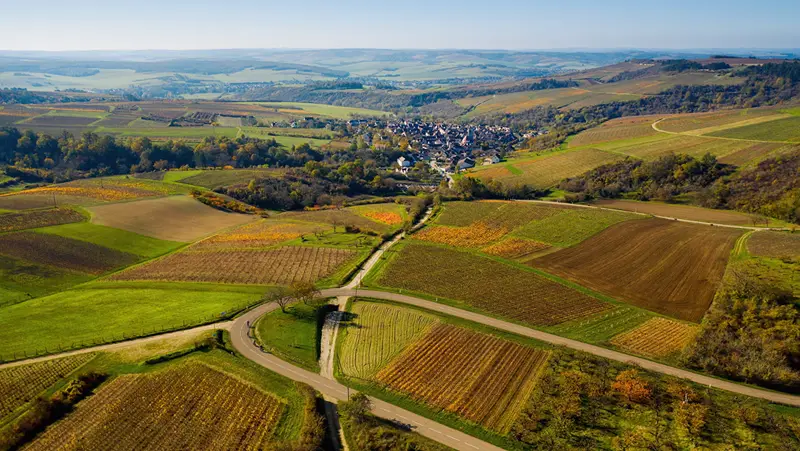
The terroir of Chassagne-Montrachet, thanks to its deep clay-limestone soils, offers greater consistency than many other Burgundian appellations. The clay soils retain water and protect the vine in dry years. Deep roots, anchored in the limestone, ensure a constant mineral supply. The result: even vintages considered “average” in Burgundy can yield excellent wines in Chassagne.
Best Chassagne-Montrachet white vintages to buy
2020 — Sun-drenched and generous
A warm, dry year that produced concentrated, rich and voluptuous whites. Chassagne's clay soils stood up to the drought better than many other appellations. Premiers Crus such as the Abbaye de Morgeot show a remarkable opulence balanced by their natural minerality. Drink between 2025 and 2035 for the Premiers Crus.
2019 — Balance and amplitude
A warm vintage but not excessive, yielding whites that are both powerful and fresh. Excellent fruit ripeness, fine underlying acidity. The wines are already seductive young yet promise a beautiful evolution. Optimal window: 2024-2034.
2017 — Elegance and purity
A vintage marked by an early harvest and lovely freshness. The 2017 whites are tauter and more mineral than the 2018s or 2019s, with remarkable aromatic purity. An excellent vintage for lovers of finely chiselled wines. Drink: 2023-2032.
2014 — Burgundian classicism
After a mixed summer, an exceptional September rescued the vintage. The 2014 whites are a model of classic Burgundy: balanced, elegant, with a cutting acidity that promises magnificent ageing. Drink: 2022-2034.
2010 — Tension and longevity
A cool, late vintage that produced whites of great tension, lively and finely chiselled. These are wines for very long cellaring, only just beginning to open up. The Premiers Crus are exceptional. Drink: 2024-2040.
2007 — Surprise and charm
Often underestimated, 2007 yielded charming whites, fruity and accessible, without the power of the great years but offering a great deal of immediate pleasure. At its peak right now.
2005 — A great cellaring vintage
Considered one of the finest vintages of the decade for white Burgundy. Concentration, richness, acidity — everything is in place. The 2005 Premiers Crus are at the very top of their expression. Drink: now-2035.
Best Chassagne-Montrachet red vintages
The reds of Chassagne-Montrachet are less well known than the whites, but certain vintages produce remarkable wines.
2019 is exceptional: concentrated, fruity reds with ripe, silky tannins. 2015 produced sun-kissed wines, powerful and charming, to drink in the next 5 to 8 years. 2010 offers more classic, structured reds that age magnificently.
Chassagne-Montrachet vintages to avoid
2021 was marked by a devastating frost in April that cut volumes by 30 to 50% in some parcels. The wines produced are often good but in very limited quantity. 2013 is a difficult vintage, hit by rain and a lack of ripeness — drink quickly if you still have any in the cellar.
How to choose the right Chassagne-Montrachet vintage
Rather than seeking only the “great” vintages, match your choice to your drinking horizon. For consumption within 2-3 years, a 2019 or 2020 Village will be perfect. For 10 years or more of cellaring, aim for a 2014 or 2010 Premier Cru. Discover our available wines in the shop.
Price is another factor: less hyped vintages such as 2017 or 2007 often offer excellent value, since demand concentrates on the most publicised years.
And remember that the producer counts at least as much as the vintage. A good winegrower draws the best from every year, while a careless producer can spoil a great vintage. To learn more about food and wine pairings by vintage, see our dedicated guide.
- Classic whites
- 2010, 2014, 2017 (tension, minerality)
- Opulent whites
- 2019, 2020 (richness, fruit)
- Long cellaring
- 2005, 2010, 2014 (Premier Cru)
- Best value
- 2017, 2007
- Exceptional reds
- 2019, 2015, 2010
Frequently asked questions
What is the best vintage of white Chassagne-Montrachet?
2010 and 2014 are considered the most classical vintages and the best suited to long ageing. 2019 and 2020 offer exceptional richness. The choice depends on your preference: tension and minerality (2010, 2014, 2017) or opulence and fruit (2019, 2020).
When should one drink a Chassagne-Montrachet Premier Cru 2019?
A 2019 Premier Cru is already accessible but will evolve favourably until 2034. The optimal window lies between 2026 and 2032, when the wine will have developed its full complexity without losing its fruit.
Are warm vintages good for Chassagne-Montrachet?
Yes, thanks to the clay soils that retain water. Warm vintages (2018, 2019, 2020) yield richer wines that are accessible earlier. The soils of the Abbaye de Morgeot, particularly clay-rich, withstand drought well.
Is it worth investing in older vintages?
The Premiers Crus and Grands Crus from 2005, 2010 and 2014 are excellent purchases for collectors. Their prices have risen but remain below those of neighbouring Puligny-Montrachet at comparable quality.